RESEARCH

Research

Research Themes

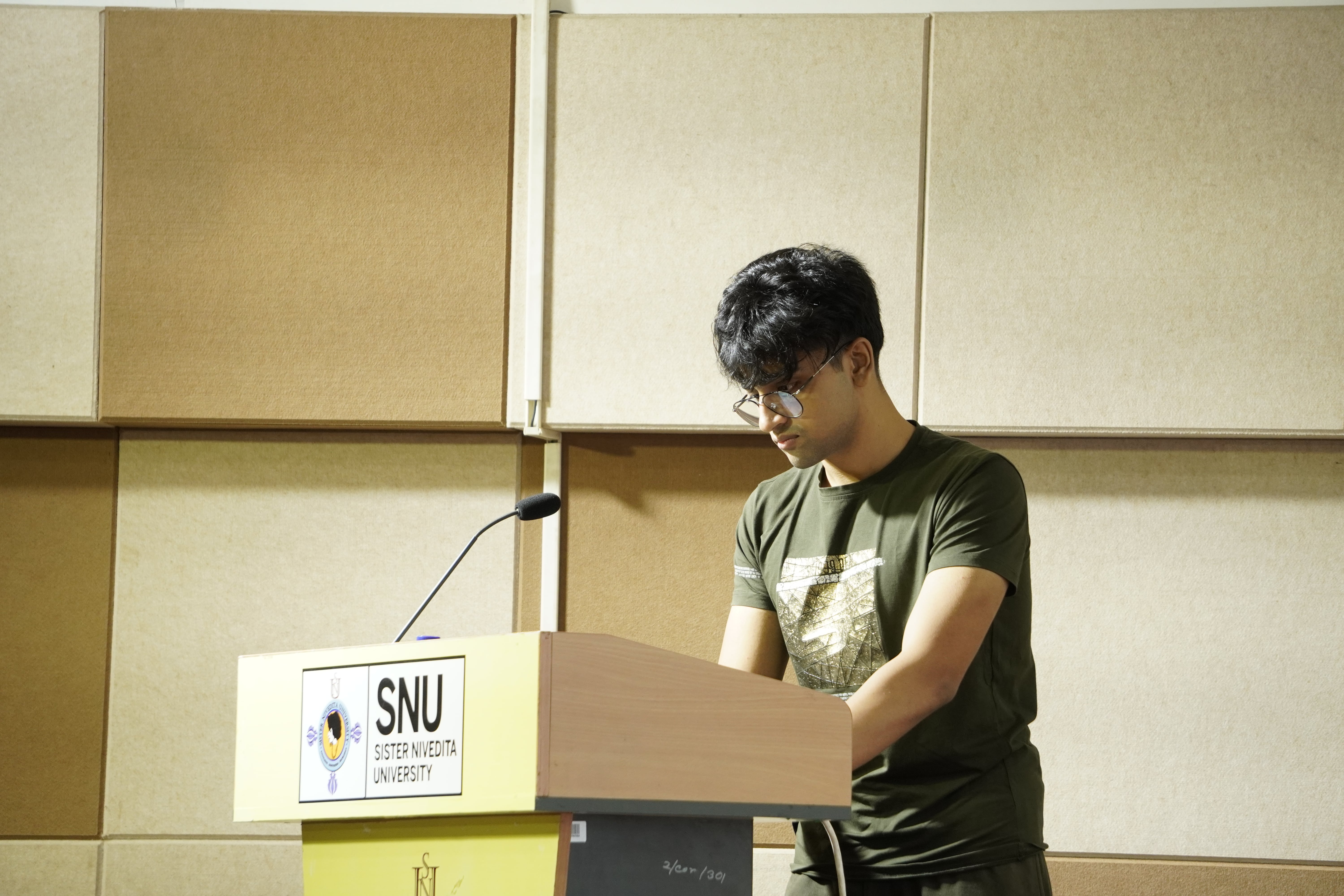
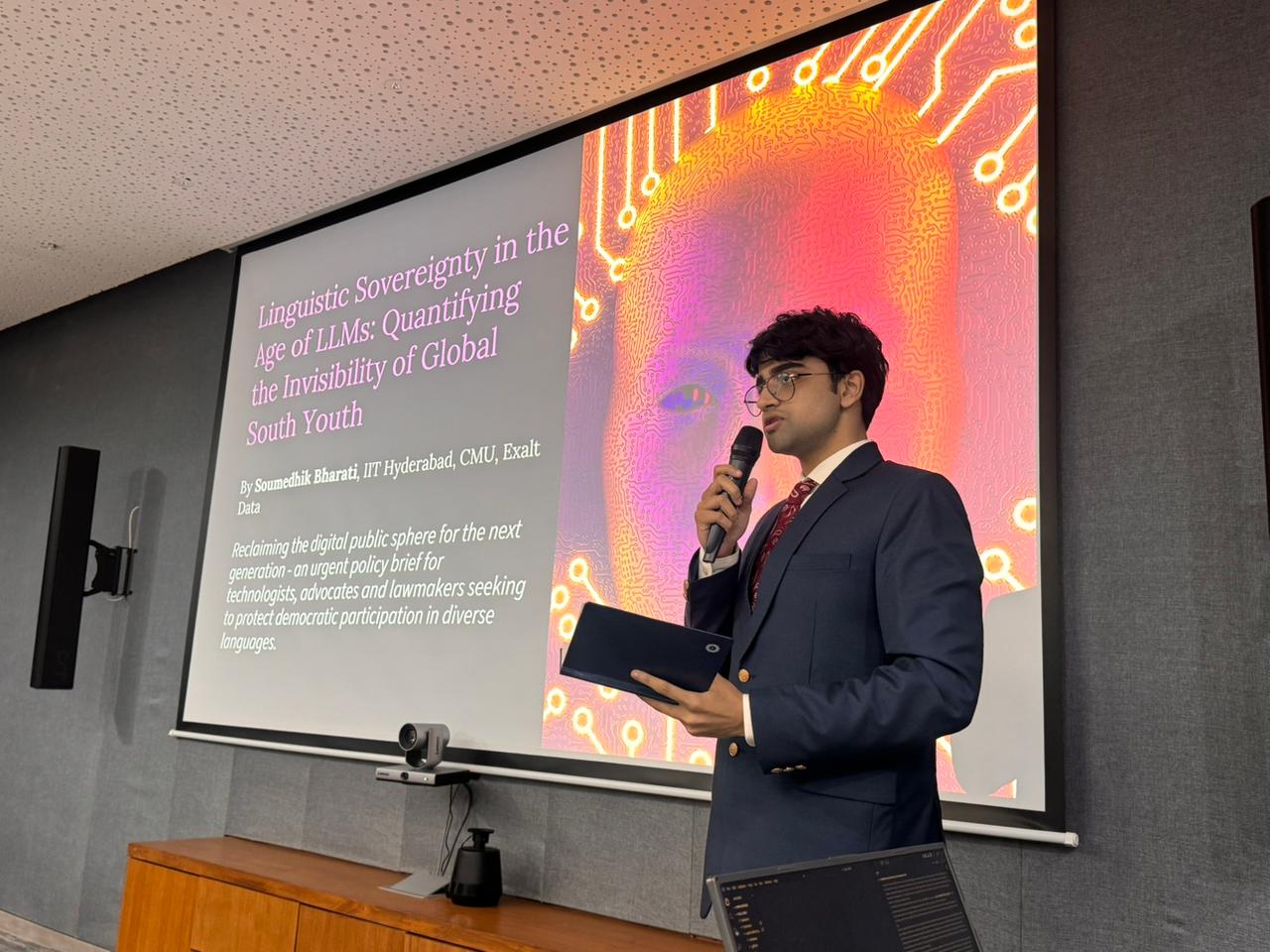
Soumedhik Bharati speaking at Rajkot Youth Conference
In a presentation at Rajkot Youth Conference about low-resource languages and culturally aware NLP.

Low-resource NLP and culturally aware language systems

I focus on building culturally aware linguistic systems that move beyond generic benchmarks and reflect real social language use. A major part of my current work is designing evaluation setups for intralingual cultural adaptation, where the same language shifts meaning across regions, communities, and context. I study how large language models handle these shifts, and I use reinforcement learning based adaptation objectives to improve culturally aligned generation and retrieval behavior.

Information retrieval and efficient ranking

I work on retrieve-rerank systems that increase throughput while preserving ranking quality under production constraints. My research includes parallelization-aware framework design on top of single-window, sliding-window, and GPTD-part style retrieval strategies, with emphasis on faster inference and stable relevance. I evaluate these systems with ranking metrics such as NDCG@10, recall, and latency-aware efficiency metrics so that speed improvements do not come at the cost of search quality.

Deep learning for computational biology and biosignal intelligence

At Carnegie Mellon University's Xu Lab, I develop deep learning systems for cryo-electron tomography that recover biological structure from high-noise imaging data. In parallel, I work on DNA sequence hashing pipelines at Sister Nivedita University for efficient sequence-level pattern discovery and classification. I also continue EEG modeling research where I design robust temporal architectures for stable representation learning in noisy biosignal settings.

Multimodal and robust deep learning

I build multimodal systems that combine vision, language, and sequential signals with a strong emphasis on robustness under real deployment noise. Across projects including HCAT-Net, image-to-music generation, image restoration, and assistive vision pipelines, I prioritize architectures that are both technically strong and practically maintainable. My objective is to improve reliability, interpretability, and deployment readiness at the same time, rather than optimizing only for leaderboard performance.

Experience

Ongoing research positions

At IIT Hyderabad with Dr. Maunendra Sankar Desarkar At IIT Kharagpur at the beginning of the internship

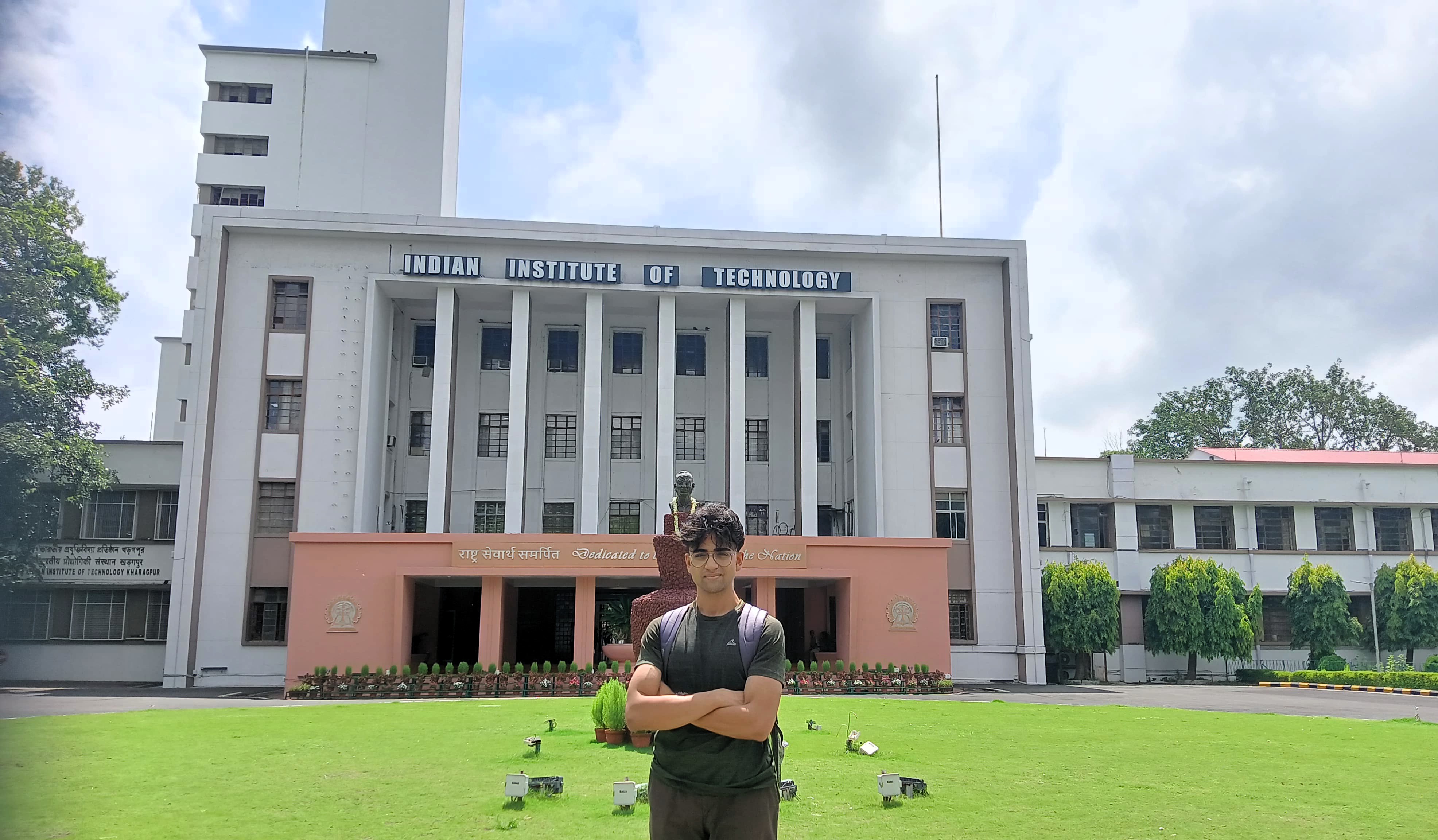
Ongoing research journey moments from IIT Hyderabad and IIT Kharagpur. The first image is with Dr. Maunendra Sankar Desarkar at NLIP Lab, and the second is from the start of my internship at IIT Kharagpur when this IR-focused workstream began.

Indian Institute of Technology Hyderabad (NLIP Lab)

I was selected for a research internship at the Natural Language and Information Processing Lab in the Department of Computer Science and Engineering at IIT Hyderabad. Under the mentorship of Dr. Maunendra Sankar Desarkar, I work on NLP and IR research with a strong focus on scalable systems that can be used in real-world settings. My work includes designing and evaluating models for applied language technology, with special attention to Indic language processing and practical retrieval performance.

Carnegie Mellon University (Xu Lab, Computational Biology)

At Xu Lab in the Computational Biology Department, advised by Dr. Min Xu, I develop deep learning methods for cryo-electron tomography analysis. I focus on building generalizable segmentation and representation learning pipelines that can recover subcellular structures and macromolecular complexes from high-noise biological imaging data. The broader objective is to make these models more robust, biologically meaningful, and easier to adapt across varying experimental conditions.

IIT Kharagpur (Center of Computational Data Science)

At the Center of Computational Data Science, advised by Prof. Pabitra Mitra, I work on improving large-scale information retrieval by integrating LLMs into a three-stage retrieval pipeline inspired by WAND and TDPart. I design and benchmark reranking strategies that are both efficient and scalable, while preserving relevance and ranking quality. This work balances latency, throughput, and accuracy so the retrieval stack remains research-grade and deployment-ready.

Ramakrishna Mission Shilpamandira Belurmath

I was selected as a visiting faculty instructor to lead faculty development and specialized AI and ML training sessions for professors and academic staff. I design curriculum that bridges theoretical foundations with modern industry practice, covering deep learning architectures, large language models, and generative AI workflows. Along with concept teaching, I run hands-on labs on model optimization and deployment techniques such as quantization and distillation, so participants can directly integrate these methods into teaching and research.

Exalt Data and Strategic Advisory

As CTO, I lead core AI and ML strategy for a data startup working at the intersection of voter intelligence and large-scale media analysis. I have led architecture for production systems including a high-dimensional voter behavior modeling pipeline and retrieval reasoning workflows for news intelligence. My role spans technical roadmap, model design, deployment strategy, and team execution, with an emphasis on moving ideas from research prototypes to reliable production delivery.

SKEPSIS

At SKEPSIS, I provide structured mentorship to student teams working on AI and ML projects across different experience levels. I support project planning, milestone execution, model debugging, and technical communication so teams can build with clarity and consistency. I also facilitate workshops and collaborative sessions that strengthen implementation quality, research mindset, and practical problem-solving.

Aethermind Epistemic AI

As Research Development Lead, I drive end-to-end deep learning and hybrid modeling projects across EEG emotion decoding, genomics, essay scoring, image restoration, and autonomous detection systems. My work includes designing transformer and cross-attention driven architectures, memory-efficient model variants, and reinforcement learning based optimization pipelines for applied decision systems. I focus on robust design and measurable outcomes, ensuring that model improvements translate into reliable performance across diverse problem settings.
Experience

Past roles

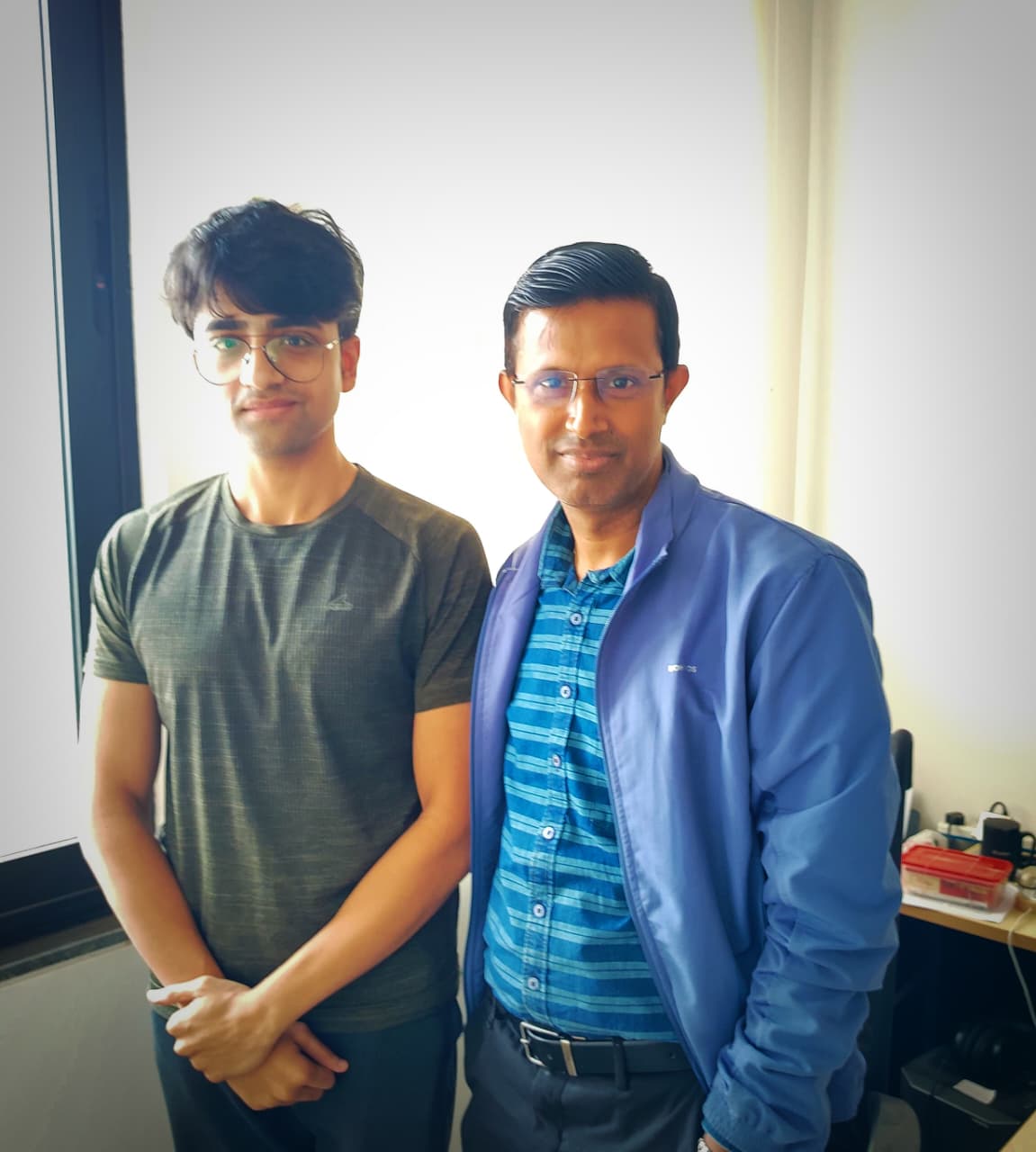
With Sudhanshu Kaushik, CEO of Exalt and youth activist At a SKEPSIS AI/ML event

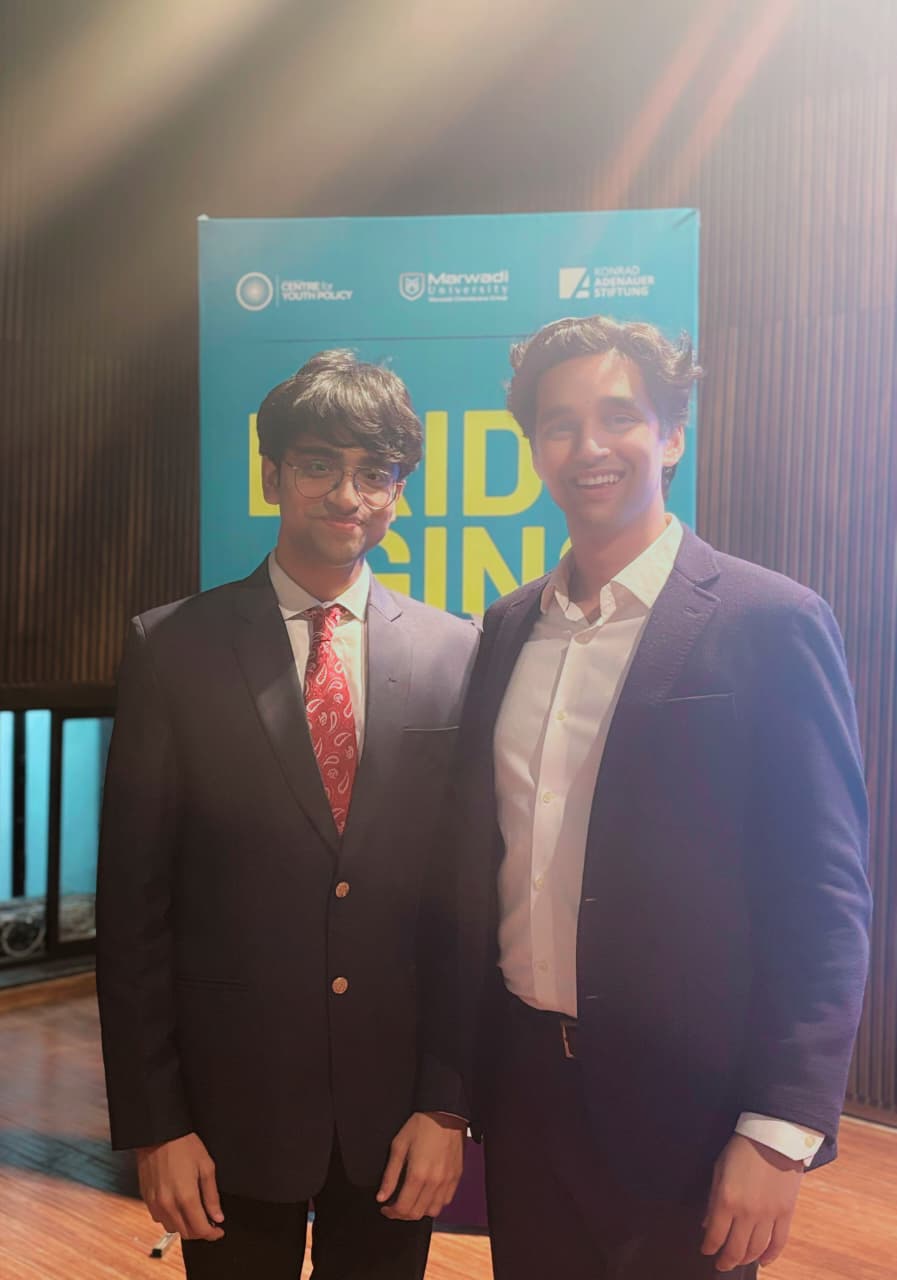
Professional community moments from two important spaces. The first image is with Sudhanshu Kaushik, CEO of Exalt and a youth activist, during a discussion on leadership and applied AI impact. The second image is from a SKEPSIS AI/ML event focused on mentoring, peer learning, and practical project execution.

Exalt Data and Strategic Advisory

During my ML Engineer internship, I worked on the full lifecycle of AI products for news intelligence and voter analytics. I developed and improved high-traffic summarization and retrieval pipelines using parameter-efficient fine-tuning, then optimized deployment with quantization and distillation to reduce runtime cost. I also coordinated with product and engineering stakeholders to deliver production-ready systems with clear performance targets and measurable business impact.

Aethermind Epistemic AI

As an undergraduate student researcher, I implemented and optimized advanced neural architectures for biomedical and genomic classification tasks. I contributed to attention-enhanced sequence models and memory-aware encoding methods that improved both predictive performance and computational efficiency. I also supported reinforcement learning and state-space modeling work, including experimentation, evaluation, and research documentation in a collaborative R and D environment.

SKEPSIS

As part of the technical core team, I helped run the AIML club's academic and community activities including workshops, seminars, and hackathons. I contributed to technical planning, event execution, peer support, and collaborative project workflows that encouraged students and faculty to engage in practical AI research. This role strengthened my experience in research-oriented community building and technical program management.

Google DSC - Sister Nivedita University

As GDG AI and ML Lead, I organized applied learning tracks, technical mentorship sessions, and implementation-focused workshops for student developers. I led programming around practical model development, experimentation discipline, and collaborative build culture so participants could move from tutorials to deployable prototypes. The role combined technical leadership with community enablement and hands-on project mentoring.

RAAPID INC

At RAAPID, I designed and optimized GRIT, a parameter-efficient instruction-tuning framework for large language models that fine-tuned only a very small fraction of model parameters while maintaining strong quality. I benchmarked GRIT against LoRA, QLoRA, and AdaLoRA across standard tasks, and observed consistent improvements in both quality metrics and training efficiency. The work included experiments on GPT-2, LLaMA, and Mistral variants, with a strong focus on reducing compute and memory requirements for scalable, cost-aware deployment.